Hippodrome Groenendaal

Hippodrome Groenendaal

Hippodrome Groenendaal

Exploring Belgian Horse Racing

2010

On a good day in 2010 my uncle Geert asked me to join them on a sweet but cold trip to an abandoned hippodrome track near Brussels and I agreed right away.

He asked me to join him and his friend to go to the hippodrome of Groenendaal near Brussels and from there the exploration took off.

19.12.2010
Zettlab AI NAS D8 Ultra

© Alan Cuypers | Hippodroom Groenendaal 2011

1800’s

Introduction

4 October 1830

Episode of the Belgian Revolution of 1830, Gustaf Wappers

ChatGPT image of Henri Coppez on his  British-bred, Belgian-trained Thoroughbred racehorse; Prince Rose

Prince Rose

Henri Coppez

4 October 1830

Hervé Denaigre; rider of the British-bred, Belgian-trained Thoroughbred racehorse, often referred to as the best horse in Belgian racing history.

© ChatGPT Image

Prince Rose (Hervé Denaigre), oil on canvas<br />
painted by Bob Demuyser (1920–2003)

Prince Rose

Hervé Denaigre

1984

Prince Rose (Hervé Denaigre), oil on canvas

© Painted by Bob Demuyser (1920–2003)

Zettlab D6_Presentation Photo

© Horse Board Game

Hippodroom

Groenendaal

History

Definition

Hippodrome is a term sometimes used for public entertainment venues of various types. A modern example is the Hippodrome which opened in London in 1900 “combining circus, hippodrome, and stage performances”.

Etymology

The word “hippodrome” is derived from Ancient Greek hippódromos (Greek: ἱππόδρομος), a stadium for horse racing and chariot racing. The name itself is a compound of the words híppos (Greek: ἵππος), meaning “horse”, and drómos (Greek: δρόμος), meaning “course”. The ancient Roman counterpart was the circus.

Description

One end of the hippodromos of the Ancient Greeks was semicircular, while the other was a quadrilateral with an extensive portico. At the front thereof, at a lower level, were the stalls for the horses and chariots. On either end of the hippodromos were posts (Greek termata) around which the chariots turned. This was the most dangerous part of the track and the Greeks put an altar to Taraxippus (disturber of horses) there to show the spot where many chariots were wrecked. Where possible, it was built on the slope of a hill and the ground excavated from one side was transferred to the other to form an embankment thereat.

1880

1888

1923

1903

1999

Hippodroom van Bosvoorde

Hippodroom van Groenendaal

Hippodroom van Bredene

Hippodroom van Antwerpen

Hippodrome de Wallonie (Bergen)

De geschiedenis van hippodrooms in België omvat een aantal belangrijke locaties en periodes. De hippodroom van Bosvoorde, geopend in 1880, was een prominente renbaan die tot 1995 in gebruik was. De hippodroom van Groenendaal, aangelegd in opdracht van Koning Leopold II, kende een bloeiperiode voor de Eerste Wereldoorlog, met tot vijftig koersen per jaar. Een ander belangrijk voorbeeld is de hippodroom van Bredene, gebouwd in 1923, maar verwoest tijdens de Tweede Wereldoorlog.

Hippodroom van Bosvoorde (Boitsfort):
Geopend in 1880, gesloten in 1995. Tegenwoordig is het terrein deels een golfterrein en deels een recreatiedomein genaamd D’horM Park.

Hippodroom van Groenendaal:
Aangelegd in de buurt van Brussel, met een unieke rechte mijl baan. De site is nog steeds herkenbaar, maar de grote betonnen tribune is afgebroken.

Hippodroom van Bredene:
Gebouwd in 1923, verwoest in 1941 door de Duitse bezetter.

Hippodroom van Antwerpen:
Geopend in 1903 op de Leopold de Waelplaats, later gesloten in 1958 en gesloopt in de jaren ’70. Het terrein is herontwikkeld door Vooruitzicht tot een nieuwbouwproject genaamd “Hippodroom”.

Hippodrome de Wallonie (Bergen):
Opgericht in 1999, is een multidisciplinaire locatie voor draf- en galoprennen, jumping en een kenniscentrum voor paarden.

Hippodrooms, afgeleid van het Griekse “hippódromos”, waren oorspronkelijk plaatsen voor paardenrennen en wagenrennen.
In België werden hippodrooms vaak gebouwd in de late 19e en vroege 20e eeuw, met een hoogtepunt in populariteit voor de Eerste Wereldoorlog.

De hippodrooms dienden niet alleen voor sport, maar ook voor sociale evenementen, feesten en amusementsdoeleinden.

Na de Tweede Wereldoorlog namen de populariteit en het gebruik van hippodrooms af, mede door de opkomst van nieuwe vormen van entertainment en media zoals televisie.

Veel hippodroomterreinen zijn herontwikkeld voor andere doeleinden, zoals woningbouw, recreatie of sportfaciliteiten.

In België zijn er nog vijf hippodromen waar drafrennen worden gehouden: de Hippodroom Waregem, de hippodroom van Kuurne, de Jekerhippodroom in Tongeren, de Hippodrome de Wallonie in Ghlin (Mons) en de Wellingtonrenbaan in Oostende.

Laatstgenoemde heropende in het begin van de zomer van 2012 de poorten voor draf- en galoprennen na verbouwingswerken aan de tribune. De Brusselse hippodroom van Sterrebeek ging failliet in 2002 en sloot in 2005 definitief de deuren.

De oudste hippodroom van België is de Wellingtonrenbaan in Oostende, die werd aangelegd in 1883. Er was weliswaar al eerder een hippodroom in Brussel, maar de renbaan in Oostende is de oudste die nog steeds in gebruik is.

Hier is wat meer informatie:

Wellingtonrenbaan, Oostende:
Deze hippodroom werd ontworpen door de belle-époque-architect Antoine Dujardin.
Renbaan van Bosvoorde, Brussel:
Deze renbaan opende in 1880 en is inmiddels gesloten, maar de gebouwen zijn gerenoveerd en het terrein wordt nu gebruikt als golfterrein.

Hippodroom van Groenendaal, Hoeilaart:
Deze hippodroom opende in 1888 en was een initiatief van koning Leopold II. De renbaan is niet meer in gebruik, maar het koninklijk paviljoen is gerenoveerd en behouden gebleven.

Hippodroom van Waregem:
Deze hippodroom is bekend om zijn steeplechase, de Grote Steeplechase van Vlaanderen, die deel uitmaakt van de Waregem Koerse.

MVRDV - Expo 2000 Hannover

© Alan Cuypers | Hippodrome Groenendaal

1830

Establishment of Belgium

04.10.1830

Episode of the Belgian Revolution of 1830, Gustaf Wappers

1880

Bosvoorde Hippodrome

Bosvoorde, Belgium | This horse racing track openend in 1880. For reference; the Kingdom of Belgium exists since 1830. So 50 years later the interest in horse racing started to pop up in the country.

1887

Groenendaal Hippodrome

Groenendaal, Belgium | Due to the findings of king Leopold II of Belgium, he ordered a new and bigger horse racing track near Brussels in the Sonian Forest. The track at Bosvoorde from 1880 was too petite for him and so they constructed. It had too sharp corners and was too small of a track to be called “royal”.

Hippodrome Groenendaal had to have a total length of 3,6 kilometres and the first race took place on 22 July 1889. The hippodrome was run by Société royale d’encouragement pour l’amélioration des races de chevaux en Belgique (SRE).

A new straight track of 1600 metres was added in 1893, unique in Belgium at that time.

In 1910 a third track, consisting of a separate figure-eight obstacle course, added to the venue resulted in 9 kilometres of race length. 

Next to the tribune is the Royal Lodge, built in 1924.

1883

Wellington Hippodrome

Hippodrome Wellington is a horse racing track named after Arthur Wellesley, 1st Duke of Wellington. Built in 1883 by Belle Epoque-architect Antoine Dujardin. The hippodrome was renovated in 2011.

Napoleon ordered a fortress on this site in the year 1811-1812 with the name Fort Royal, but unfortunately it wasn’t completed before he fell.

werd meermaals de zomerbestemming voor koning Leopold II en de rest van de koninklijke familie. De koning gaf samen met de hertog van Wellington het startschot voor de eerste officiële paardenren datzelfde jaar.

Aceg Wellington Hippodroom
Koningin Astridlaan 10
8400 Oostende

ostendseaplace.be

Groenendaal Hippodrome

© Photos | Alan Cuypers

Hippodrome of Wellington

© Photos | Archief Stad Oostende

The Tribune

The Stables

Prison H15

Prison H15

Prison H15

Centre pénitentiaire de Lille-Loos-Sequedin

→ 2024.03.23 – 2024.04.12

Prison H15

Not just a random prison

Loos-Lille prison is the better-known name, although was let’s say. It is completely demolished today.

This prison closed in 2011, originally there was a monastery on the site, but turned into a prison in the 19ᵗʰ century. 1500 Inmates was the max. capacity. It had a wing for both men and women.

We visited this interesting prison twice in 2014 and we found it astonishing to explore.

Zettlab AI NAS D8 Ultra

© Prison H15 | door locks

Holland creates space | MVRDV – Expo 2000

Holland creates space | MVRDV – Expo 2000

Alan Portrait - 2016

Holland creates space | MVRDV – Expo 2000

MVRDV Expo 2000 - Hanover

MVRDV

What does it stand for?

MVRDV is an acronym for the founding members of the architecture and design practice with the same name: Winy Maas, Jacob van Rijs and Nathalie de Vries.

Founded in 1993 in Rotterdam, The Netherlands. Current offices with 250 employees are located in Rotterdam, Shanghai and Paris.

Check out their amazing creations, click here to learn more.

Expo

2000

The Netherlands

Pavilion

Expo 2000

A world’s fair

World’s fairs or world fairs haven been in existance for quite a long time and can be officially traced back to The Great Exhibition of 1851 in London where the Crystal Palace was made out of cast iron and glass by architect Sir Joseph Paxton.

These fairs, or World Expos as we modern Europeans call it, are designed to showcase a nation’s achievement through architectural pavilions. Participants of the World Expos usually build their own pavilions and are thereby the most expensive exhibitions out there.

In the year 2000, the World Expo was held in Hanover, Germany from Thursday 1 June to Tuesday 31 October 2000. For this event the Hanover Fairground (Messegelände Hannover) was chosen, which was originally a place where military aircraft were created.

At the Expo 2000 were 40 million visitors expected but a mere half appeared at the event and it unfortunately became a flop and financial failure as a result. Nevertheless the Dutch pavilion present at the exhibition seemed to be very successful for the Dutch Economy despite a generally failed expo at the time.

MVRDV Expo 2000 - Hanover

Dutch

Open-mindedness

Flat

Landscapes

Our Visit

Another perspective

As Alan’s friend Hannes was studying architecture in Antwerp at the moment of their travel they planned their trips to fulfull their needs with either empty buildings or architectural highlights in places less explored. They visited Berlin 2 years earlier in April 2012 when they had seen leftovers of the winter’s snow and took father’s tent to accommodate their nights to make their trip a little less expensive.

Back to Hanover 2014, where Alan & Hannes took the car from Antwerp to Germany & Poland to attend a Belgian/Polish family wedding. Our trip lasted about 3 weeks and on our schedule was the Netherlands Pavilion from the Expo 2000 exhibition event, located in Hanover, Germany.

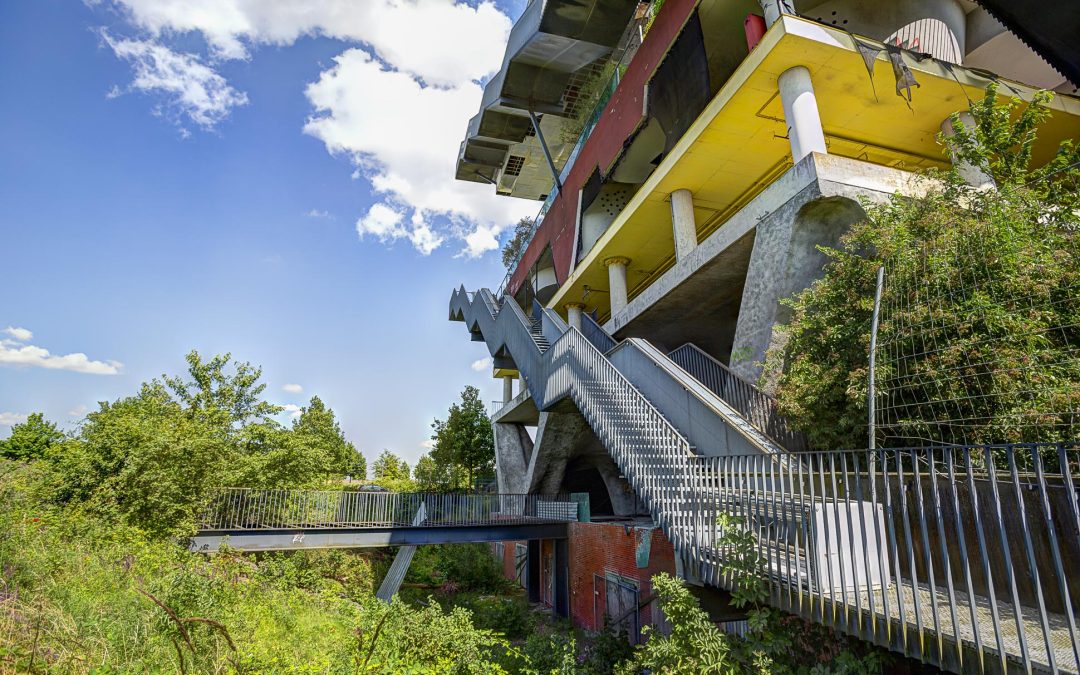
We knew it was abandoned for years and that is exactly why we wanted to take a glimpse of this extraordinary building. Just to see with our own eyes what the Dutch had created 14 years earlier.

It was painful to see such an inovative creation in such despair and actual state of decay. Vandalists came long before us…

MVRDV Expo 2000 - Hanover

Decay

Urban exploration unsuccessful

In the picture above you can see Alan posing for a photo while sitting near the edge of a huge building in decay.

This is called urban exploration at its best. No guard, no fence, no people, well almost no people, no rules, no nothing. Well, haha, we wish right!

Actually these properties still belong to someone or the government, but are usually left behind unattended and neglected for years. So basically one can freely enter, but beware to enter with caution and great awareness of hidden dangers are always lurking around the corner. Take full responsibility if you want to enter, especially when taking other people with you and we suggest to explore at least with two or even three in case something bad might happen. You never know!

MVRDV Expo 2000 - Hanover

Future Plan

Is it going to be preserved?

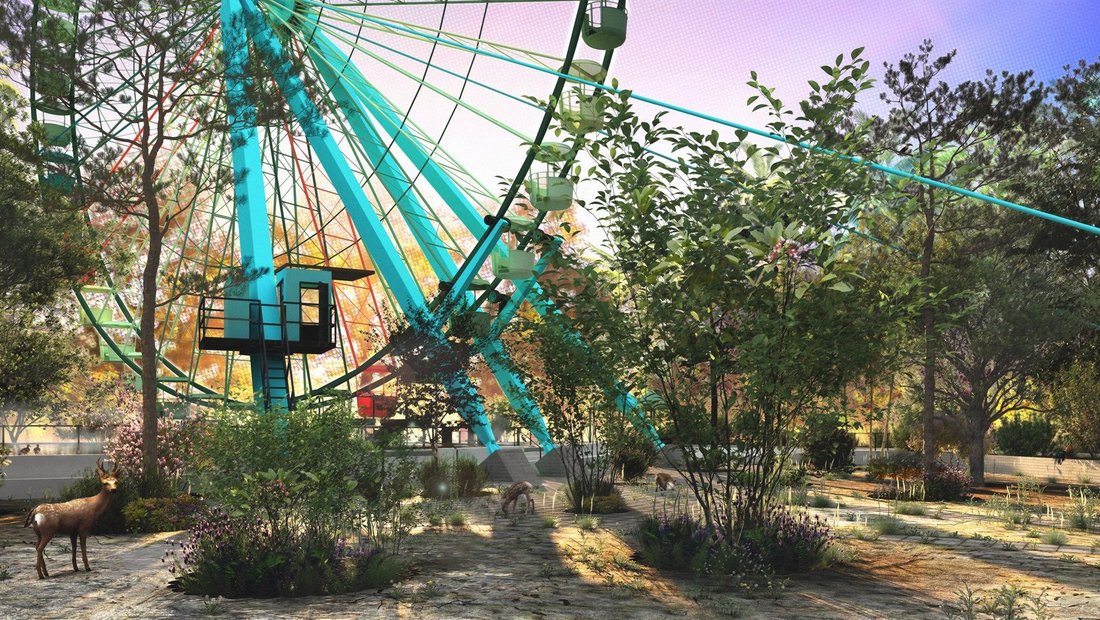
Plans are on the table to preserve this creative piece of architecture from the MVRDV team.

But no sketches of it have been shared as of yet.
Its

Future

Spreepark – Der Freizeitpark der DDR!

Spreepark – Der Freizeitpark der DDR!

Spreepark – Der Freizeitpark der DDR!

Our Squeaking Adventure While Exploring Berlin.

By Alan & Hannes | A Belgian & A Belgian

Our Explore

14.07.2014

As we, Alan & Hannes, were invited to attend and also film the marriage of Alan’s 2nd cousin Nicky and Mateusz who is of Polish descent, we planned our trip by car to Poland through Germany with a couple of stops on the road.

First stop, Hanover, Germany, where we checked out the MVRDV building from Expo 2000, which was, off course, inaccessible due to abandonnement and closure of the site. Read the post here.

Second stop, Berlin, also Germany, we found out about the once famous Spreepark, which closed its doors in 2002 and opened in 1969.

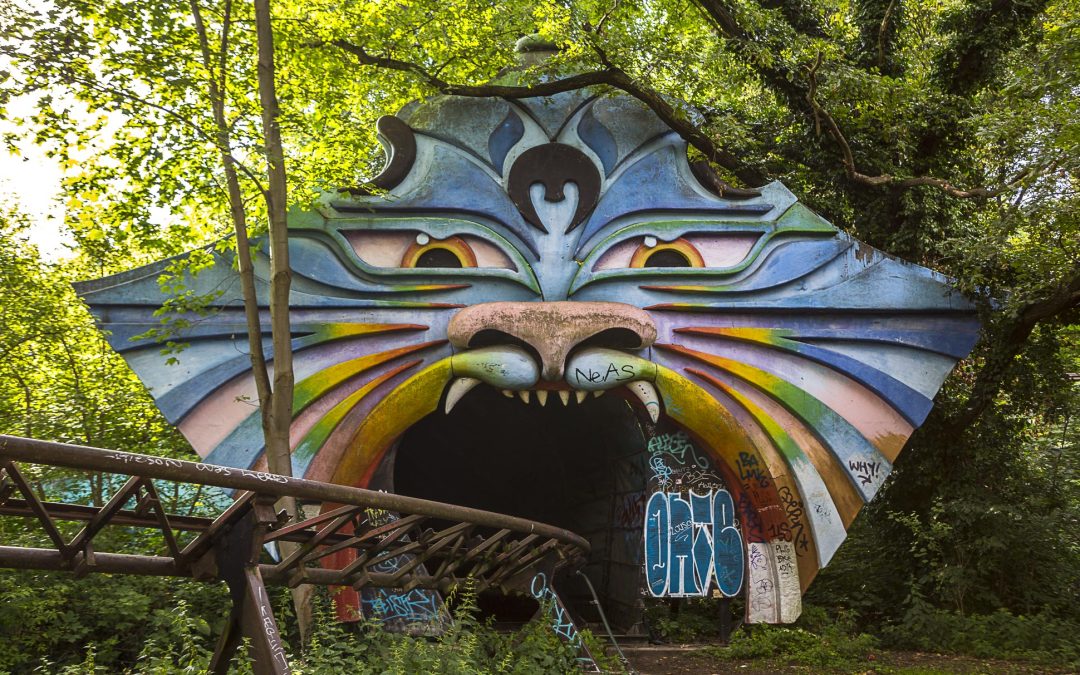
We didn’t regret our secret explore of this exciting theme park!
Read on to find out what we came across.

Spreepark Berlin
Spreepark Berlin
Spreepark Berlin
Spreepark Berlin
Spreepark Berlin
Spreepark Berlin
Spreepark Berlin
Spreepark Berlin
Spreepark Berlin

Two Sad Faces

Let’s Face History

It must be said that, at the time of the event, we both were 24 years of age and we were kind of stunned by the fact that a place like this was left behind for more than a decade, just because it went bankrupt as less visitors came to the park.

We didn’t understand quite well where all those kids and parents would go to if they like to enjoy a good theme park likes this.

There’s a lot of amazing cool rides in here, yes, they are a bit old and outfashioned. But when refurbished and with a fresh layer of paint, it would be good enough for many kids out there. At least that’s what we think.

Now, 7 years later, we’re writing about this place and to our surprise the government of Berlin has plans to reopen the park step by step.

Our sad faces turned into happy ones after all.

Spreepark Berlin
Spreepark Berlin
Spreepark Berlin
Spreepark Berlin
Spreepark Berlin
Spreepark Berlin
Spreepark Berlin
Spreepark Berlin

Finding The Ferris Wheel

It Wasn’t That Hard

All of us know that there is a ferris wheel in every theme park in the world and every explore is about finding that first and explore the remaining later. For us, we were in unknown territories as Germany isn’t our country of birth, so we were very cautious and didn’t want to get noticed. So we stayed out of sight most of the time and we had a great amount of fun too.

We’re always psyched about our urban explorations. This “thing” is so much fun, although actually not very nor always legal to trespass a property that still belongs to an individual or city. There’s always an owner who might have guarded their property, or maybe not, but always be careful when considering intruding such big scale of properties as it isn’t always safe to hang out.

Always go with at least two people, so if one gets into trouble for any reason, then the other one can search for help or try to control the situation himself or herself. Advice for the young people out there who love exploring abandoned stuff. People do die in abandoned buildings because they are not careful enough or explore on their own.

Spreepark Berlin
Spreepark Berlin
Spreepark Berlin

Its Location

Treptow-Köpenick, Berlin

The Spreepark is located right next to the Spree river, hence the park’s name. Mitte Berlin, or the heart of the city of Berlin, is located just 7 kilometers away, which makes the park easily reachable for those who want to dive into Berlin’s history or enjoy a relaxing walk in the Plänterwald’s park, where the Spreepark is located.

The park has in fact a whole path around it where one can enjoy the view of the Spree river and the old park at the other side of the fence. Hiking, biking or strolling around with the kids is a very nice activity on a quiet Sunday afternoon.

Spreepark Google Earth
Spreepark Original Map

The Attractions

1969

The GDR built it’s first and ever only Kulturpark in the GDR in 1969.

With the highest attraction being the Ferris Wheel standing tall at a height of 45 meters. This Wheel still spins and makes creepy noises, check out our video here.

Spreepark Berlin

A New Concept

2018-2026

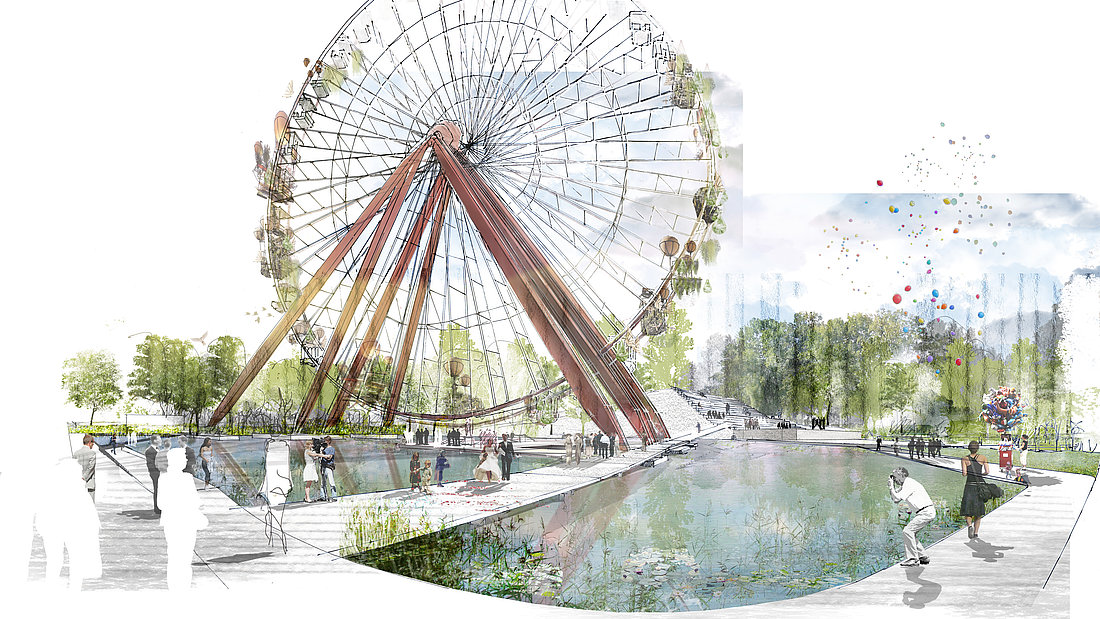
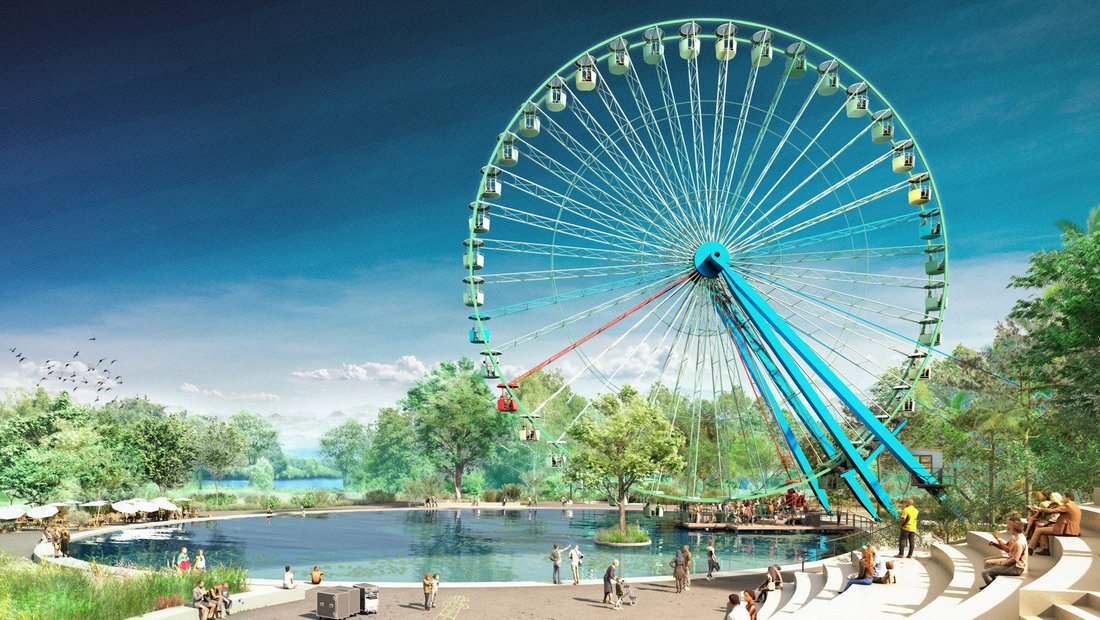
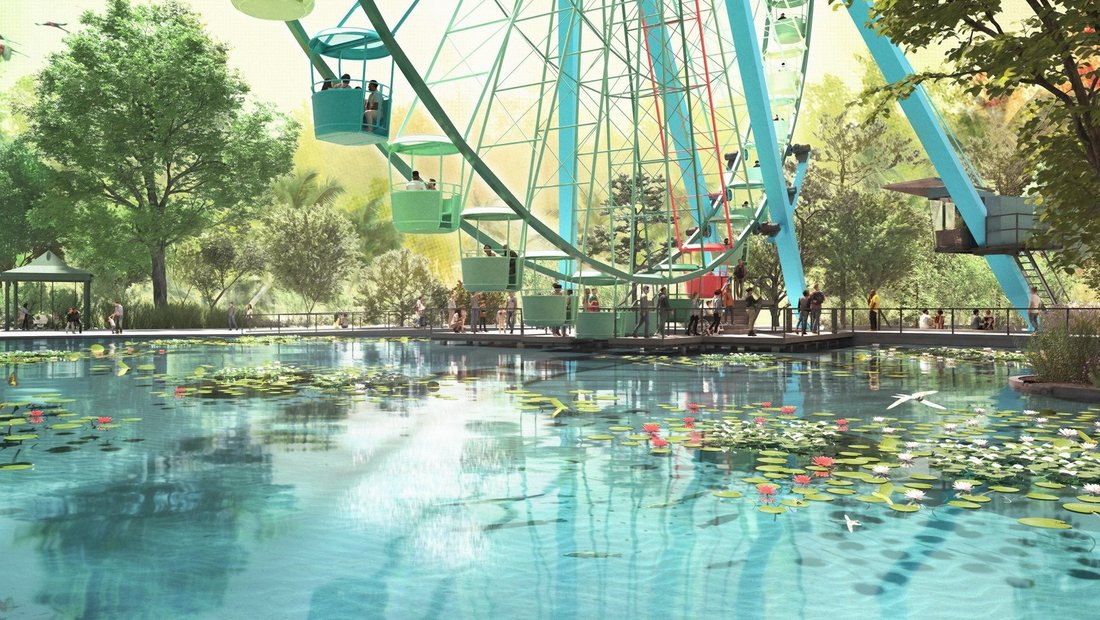
Concept drawings were created in 2018 with the intention to open the park once again in three main stages.

From 2022, the Eierhäuschen (Egg House) will be open for the public, then, in 2024 the area around the ferris wheel will be accessible, and at last but not least, in 2026 the entire Spreepark will be completed.

All five stages are properly explained on the website of the Spreepark, which you can check out here.

Spreepark Berlin
Spreepark Berlin
Spreepark Berlin
Spreepark Berlin

The Official Website

2021

Check out the Spreepark’s official website here or https://www.spreepark.berlin/en/.

Now you can officially visit the park with prices at € 5 for adults & € 3 for children from 6 to 14 years old.

Get your tickets here.

Spreepark Berlin
Achterbahn „Spreeblitz“ - Rollercoaster Spreepark
Spreepark Berlin
Spreepark Berlin
Spreepark Berlin
Spreepark Berlin
Spreepark Berlin

Twin Rhino uses tasty, but safe and legal cookies. They are not the equivalent of other dangerous virusses - like many people think - but they are there to help remember the pages and other things you have visited in your web browser. By continuing to use Twin Rhino, you accept our use of cookies or you can always opt out.  Learn more